
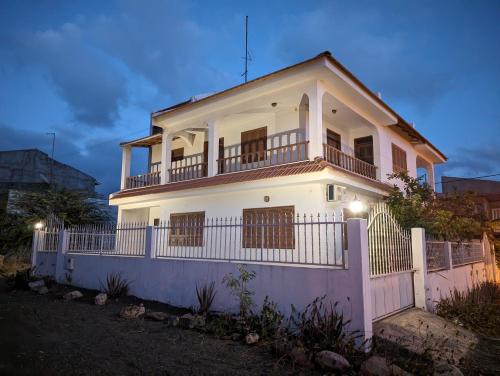
 4★
In short
Tarrafal is a fishing town on Santiago's north-west tip, about 70 km from Praia and roughly 1 h 15 to 1 h 30 by road. Its sheltered, palm-lined bay is calm enough for easy swimming and snorkelling, and the former prison camp, now the Museu da Resistência, stands above the town. Serra Malagueta natural park is close. Two or three nights covers it well.
Why stay in Tarrafal?
Tarrafal sits on Santiago's north-west tip, about 70 km from Praia and roughly 1 h 15 to 1 h 30 by road. It is a working fishing town rather than a resort, and that suits travellers who want a base away from the capital with sea, hills and difficult history within a short drive. The bay is sheltered, so the water stays calm when exposed Atlantic beaches elsewhere in the islands are rough. Evenings are quiet, and the waterfront fills with people rather than traffic.
The town works well as a two or three night base. Praia is close enough for a day trip, Serra Malagueta is on the way, and the old prison camp above the coast gives context to the island's twentieth-century history. Take care with names: this is the Santiago Tarrafal. Tarrafal de São Nicolau is a different town, and Tarrafal de Monte Trigo is a village on Santo Antão. Entry formalities change, so check ease.gov.cv well before booking flights.
The bay and the beach
The beach curves around a sheltered bay on the north-west coast, lined with palms and backed by the town. Painted fishing boats are pulled up on the sand, and they leave early. Swimming is calm by Cape Verdean standards because the bay takes the swell out of the open Atlantic. The sand shelves gently, which helps families with small children. The water is clear enough for snorkelling close to the rocks at either end. Diving is possible locally; ask about conditions before booking.
The waterfront behind the sand is the centre of town life. Fishermen sell the morning catch near the pier, and small shops and food places line the streets behind the bay. The beach is free and open at all hours, and it never feels crowded. Outside the shelter of the bay the Atlantic is stronger, so keep an eye on children and stay within the curve of the sand. Bring water and shade; natural shade is limited at midday.
- Calm swimming: The bay takes the swell, so the water is gentle for most of the year.
- Fishing boats: Painted boats land their catch on the sand in the early morning.
- Snorkelling: Clear water and rocks at the edges of the bay suit a mask and fins.
- Evening walk: The waterfront and pier are busiest at sunset, when the town comes out.
The Tarrafal camp museum
Above the town stands the walled compound of the Campo de Concentração do Tarrafal, the prison camp run by Portugal's dictatorship, which held political prisoners until the 1974 revolution. It held people from Portugal and later from the African liberation movements. The site is now the Museu da Resistência, with cells, walls and displays that explain who was held and why. Allow an hour or more; the material is dense and sobering. Labels are mostly in Portuguese, so a translation app is useful.
Opening days and hours change, so confirm with the Câmara Municipal de Tarrafal before setting out. The compound stands above the town on the road out, which makes it easy to combine with a drive into the hills. Visitors are asked to keep voices low and to treat the cells as the memorial they are. Photography is generally permitted, but check signs on site. Budget time to read the panels properly rather than walking through quickly.
Walks in Serra Malagueta
Serra Malagueta natural park covers the mountain country inland from Tarrafal, on the road towards the interior of Santiago. The climb from the coast passes through farmland and into cooler, greener hills. Walking is the main reason to stop. Paths leave the road and run through the park, and the views take in ridges, valleys and, on clear days, the coast. Cloud can arrive quickly, so carry a light jacket and water. A local guide is worth arranging for anything beyond the short paths.
The park sits roughly midway on one of the two usual road routes between Praia and Tarrafal, so a stop costs little time. The other road runs through the interior via Assomada. Both are slow, winding mountain roads, and neither is quick. Park rules and guiding arrangements can change, so check with the park authority or the municipality in Tarrafal before planning a full day on foot. Drive the mountain road in daylight, since mist can slow everything down.
Where to stay in Tarrafal
Tarrafal is a small town, and the choice of places to sleep is modest. Expect small hotels, guesthouses and apartments rather than large resorts, most of them within a few minutes of the bay. Rooms are simple and often family run. There is no resort strip, so the choice is between places in the centre and a few on the edge of town. Book ahead for holidays and the busiest weeks of the European winter.
When comparing places, ask about distance to the beach and whether the room has a fan or air conditioning, since the town is warm all year. Hot water and wi-fi vary, so check before booking if either matters. Many small places take cash, and card machines can fail, so keep enough local currency for the stay. Ask the owner about the best time to walk to the camp or the hills. Staying near the bay keeps the beach, food and transport within easy reach.
Food and fishing
In a fishing town the fish is the reason to eat out. Tuna and wahoo are landed here and grilled simply, and octopus appears stewed or grilled. Cachupa, the slow-cooked corn and bean dish, is the national staple and turns up on most menus, with the leftovers fried into cachupa refogada the next morning. Portions are generous, and lunch is often the main meal of the day. Ask what came off the boats that morning.
Grogue, the sugarcane spirit, comes from Santo Antão and Santiago, and ponche is the sweetened, spiced version. Goat's cheese from the islands is worth trying with it. Eating places in Tarrafal are small, and kitchens close between meals, so plan lunch and dinner rather than grazing through the afternoon. Vegetarian choices exist but are limited, and it helps to explain what you do not eat. Ask for the catch of the day and expect it to be cooked to order, which takes time.
- Cachupa: Corn and beans cooked slowly, then fried as refogada the following morning.
- Tuna and wahoo: Firm fish landed locally, usually grilled or fried with rice.
- Octopus: Stewed or grilled, and a good test of a small kitchen.
- Goat's cheese: Made in the islands and served plain or with fruit.
- Grogue and ponche: Sugarcane spirit from Santo Antão and Santiago; ponche is the sweet version.
Getting there and around
Road is the only way to Tarrafal. From Praia, the drive is about 70 km and takes roughly 1 h 15 to 1 h 30, depending on the route and stops. One road climbs through Serra Malagueta, the other runs through the interior via Assomada. Aluguers, the shared minibuses and pick-ups, cover the route and leave when full. Taxis and hire cars give more control over timing, and a hire car makes the mountain stops easier. Agree the taxi fare before setting off.
The town itself is small enough to cross on foot, and the bay, the market streets and most places to eat sit within a short walk of each other. For the camp, the hills and sights further along the coast, arrange a car, a taxi for the day or a place on a shared minibus. International flights land at Nelson Mandela International in Praia, then it is the road journey north. Keep a buffer day before flying home if you are crossing the island by aluguer.
When to go to Tarrafal
Tarrafal is warm all year, with daytime temperatures usually in the mid-20s °C, and the sea is swimmable in every month. The driest months run from November to June. Short, irregular rain falls mostly between August and October, and the hills turn green afterwards. Trade winds are strongest from about November to May, which keeps the coast bearable in the hottest weeks but can put sand in the air on exposed stretches. Dust haze from the Sahara can reach the islands in winter.
Sea temperatures peak around August to October, at about 25 to 26 °C, and are coolest in February and March, at about 21 to 22 °C. For walking in Serra Malagueta, the hills are cooler than the coast at any time of year, but cloud and rain make paths slippery between August and October. Check the forecast with the national meteorological service before a long walk, and keep a buffer day for the drive back to Praia.
- Dry season: November to June brings the most reliable sunshine and little rain.
- Rains: Short, irregular showers fall mostly between August and October.
- Trade winds: Strongest from about November to May, which suits walkers and kitesurfers.
- Sea temperature: Warmest around August to October, coolest in February and March.
Hotels in Tarrafal, Santiago
29 stays in the IMPT hotel database are in or near Tarrafal, Santiago. Listed 5-star first, then 4-star, then by guest score. No prices here: each button opens live availability in the IMPT app.
4★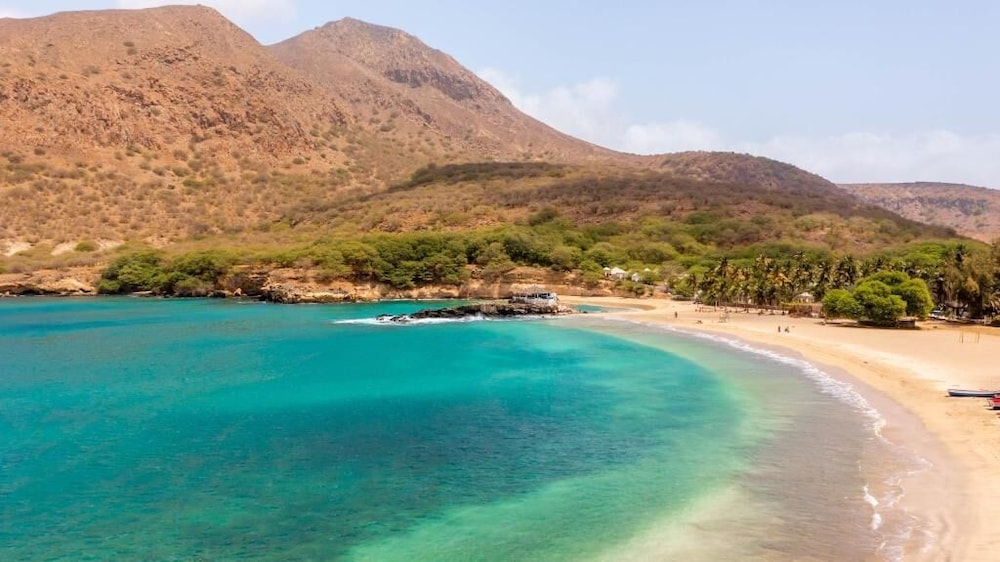 4★
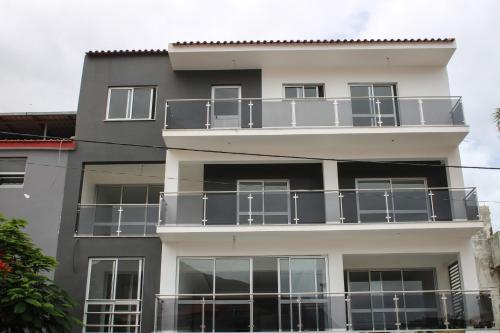 4★
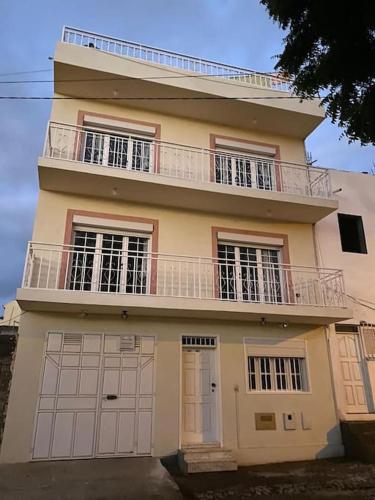 4★
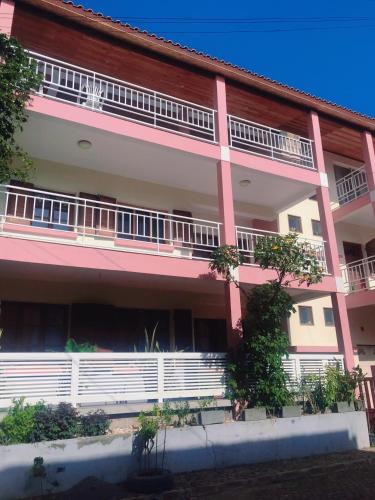 4★
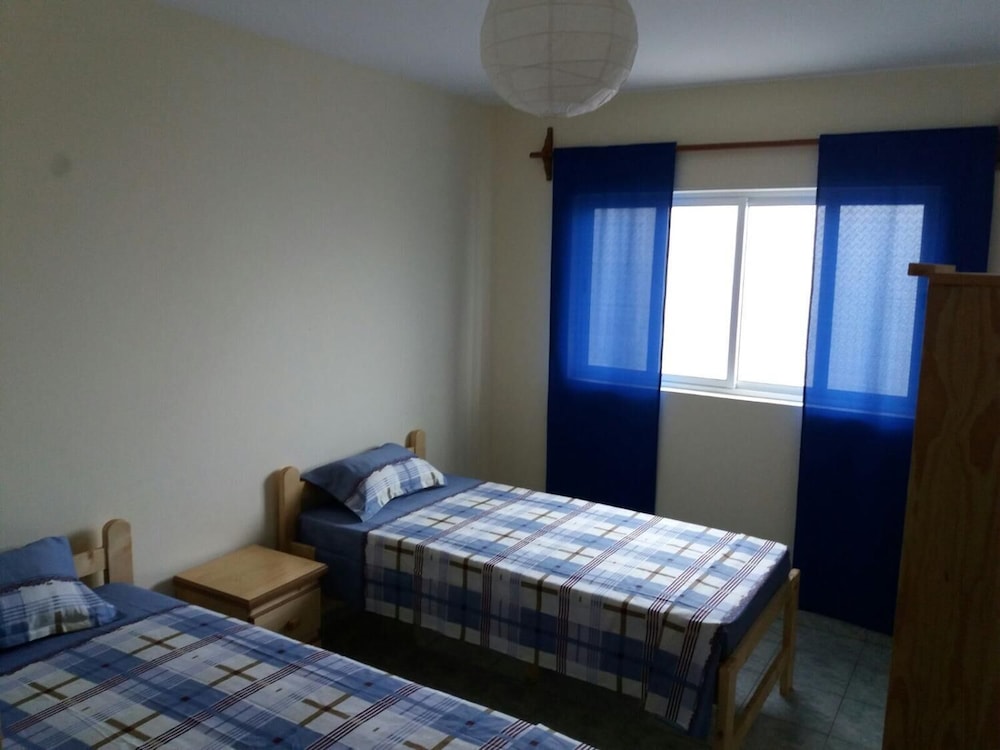 3★
Pensão Da Mex Tarrafal
Tarrafal, Santiago · 3-starGuest score 4.6/5 from the booking supplier · 24 reviewsSee live priceFrequently asked questions
How do you reach Tarrafal on Santiago?
By road only. Tarrafal is about 70 km from Praia, roughly 1 h 15 to 1 h 30 by car, with one route through Serra Malagueta and another through the interior via Assomada. Aluguers, the shared minibuses and pick-ups, run the route and leave when full. Taxis and hire cars give more control over stops. International flights land in Praia.
Is the beach at Tarrafal on Santiago good for swimming?
The bay is sheltered, so the water is calmer than on exposed Atlantic beaches, and the sand shelves gently. That makes it a good choice for families and less confident swimmers. Outside the curve of the bay the water is stronger, so stay near the middle of the beach and watch children. The beach rarely feels crowded.
What was the Tarrafal prison camp on Santiago?
The Campo de Concentração do Tarrafal was the prison camp run by Portugal's dictatorship, holding political prisoners until the 1974 revolution, first from Portugal and later from the African liberation movements. The walled compound above the town is now the Museu da Resistência, with cells and displays. Opening days change, so confirm with the Câmara Municipal de Tarrafal before going.
Is Tarrafal on Santiago the same as Tarrafal de São Nicolau?
No. Tarrafal on Santiago is the fishing town on the island's north-west tip, about 70 km from Praia. Tarrafal de São Nicolau is a separate town on São Nicolau, and Tarrafal de Monte Trigo is a village on Santo Antão. When booking ferries, aluguers or accommodation, give the island as well as the town name to avoid confusion.
How long should you spend in Tarrafal on Santiago?
Two or three nights suits most visitors. That allows an afternoon on the bay, a visit to the Museu da Resistência and a walk or drive in Serra Malagueta, with time left for the slow fishing-town evenings. A single night feels rushed, since the drive from Praia takes roughly 1 h 15 to 1 h 30. Longer stays can add day trips towards the interior.
Can you visit Serra Malagueta natural park from Tarrafal?
Yes. The park lies inland from Tarrafal, roughly midway on one of the two road routes to Praia, so it works as a stop or a half-day. Paths leave the road and cross the hills. Cloud and mist arrive quickly, so carry a jacket and water, and check conditions with the park authority or the municipality before a long walk.
When is the best time to visit Tarrafal?
November to June is driest, with reliable sunshine and warm days in the mid-20s °C. Short, irregular rain falls mostly between August and October, when the hills turn green. Trade winds are strongest from about November to May. The sea is warmest around August to October and coolest in February and March. Dust haze from the Sahara can appear in winter.
Is Tarrafal on Santiago good for families?
It suits families who want calm water and short distances rather than resort facilities. The sheltered bay shelves gently, the town is small enough to walk, and evenings are quiet. Food is simple and fish-led, and the fishing boats are a draw for children. A car helps for the camp and the hills, and shade is limited at midday.
Do you need a car in Tarrafal on Santiago?
Not for the town. The bay, market streets and eating places sit within a short walk of each other. A car or a taxi for the day helps for the Museu da Resistência above the town, Serra Malagueta and sights further along the coast. Aluguers cover the Praia road but leave when full, so allow extra time.
Read next
Sources: Câmara Municipal de Tarrafal, Instituto Nacional de Meteorologia e Geofísica, Direção Nacional do Ambiente, EASE (ease.gov.cv). Editorial review: 4 November 2026, IMPT Cape Verde editorial team. Schedules, entry rules and opening times change; check before you go.