
 4★
In short
Tarrafal beach is a calm, sheltered sandy bay on the north-west tip of Santiago, with palms behind the sand and painted fishing boats on the shore. Swimming is easy in normal conditions and snorkelling works along the rocky edges. It is about 70 km from Praia, roughly 1 h 15 to 1 h 30 by road, and pairs well with the Museu da Resistência and Serra Malagueta natural park.
Island
Santiago
Allow
day trip
Type
Beaches
Nearest base
Tarrafal
Where is Tarrafal beach?
Tarrafal sits on the north-west tip of Santiago, the largest and most populous island in Cape Verde. The beach is the front room of the town: a curve of pale sand at the head of a bay, palms along the back of the shore, and painted fishing boats pulled up or floating just offshore. It is about 70 km from Praia, roughly 1 h 15 to 1 h 30 by road.
The road from the capital crosses the interior of the island, climbing through hills and farming villages before dropping down to the coast. Most visitors treat Tarrafal as a day trip, arriving late morning and leaving before dark. Staying a night or two is also possible, and it gives you the early morning on the seafront, when the boats head out and the bay is at its quietest.
What is the beach like?
The bay faces north-west and its shape takes the edge off the Atlantic swell, so the water inside is usually calm. The sand runs the length of the seafront, with palms and low trees behind it giving shade through much of the day. Fishing boats, many of them painted, lie on the sand or moor a short way out.
This is a working beach rather than a resort strip. Fishermen mend nets and sort the catch near the boats, and salt and fish are part of the scene. Behind the shore the town is small, with a seafront road, a few places to eat and hills rising beyond. Arrive in the morning to watch the boats come in, or in the late afternoon when the light softens.
Swimming and shade are the two reasons to come, and both are easy to find. Palm cover along the back of the beach means an afternoon can pass without an umbrella, and the sand stays walkable even in the heat. The bay is small enough to cross on foot in a few minutes, which keeps a day here simple.
Is it good for swimming and snorkelling?
Swimming at Tarrafal is straightforward in normal conditions. The bay is sheltered, the entry is mostly sand and the water stays calm close to the shore, which makes it one of the easier places to swim on this coast. Conditions change with swell and wind, so look at the sea before going in, stay inside the bay and keep an eye on children.
Snorkelling works best at the rocky edges of the bay, where the sand gives way to boulders and weed. Visibility depends on the swell and on how much sand is in the water, so some days are clearer than others. Bring your own mask and snorkel, since equipment is not something to count on, and go out with a companion.
The bay is also a working harbour, so watch for boats moving in and out and for lines and nets near the shore. Keep clear of moored boats and of anyone working. There is no need for a boat trip to enjoy the water here; the appeal is a short swim, a snorkel along the rocks and time in the shade afterwards.
- Calm water: The sheltered bay usually gives flat water close to the sand, even when the open coast is rough.
- Sandy entry: Most people walk in from the sand rather than from rocks, which suits weaker swimmers.
- Rocky edges: Snorkelling is better at the sides of the bay, where boulders and weed hold small fish.
- Working boats: Keep a clear line between you and moving boats, and never swim out to a moored one.
How do you get there from Praia?
Tarrafal is about 70 km from Praia, roughly 1 h 15 to 1 h 30 by road. The route crosses the interior, so the drive is hilly and slow in places, with villages, terraced slopes and views back down to the coast. Aluguer minibuses run between the capital and Tarrafal and leave when full; a hire car gives more freedom to stop on the way.
Taxis are available in Praia and at the airport, and the fare should be agreed before setting off. Drivers often know the road well and can wait for the return, which suits a day trip. Times and services change, so confirm the current departure point and the last return of the day locally before you rely on them.
- Aluguer: Shared minibuses leave Praia for Tarrafal and set off when the seats are taken.
- Hire car: A car gives you the stops at Serra Malagueta and the museum on the same run.
- Taxi: Agree the fare first, and ask whether the driver will wait for the return trip.
- Buffer time: Allow spare time for the return; the interior road is slower than the distance suggests.
What else is there to do?
The Museu da Resistência is the main reason many people stop in Tarrafal at all. It occupies part of the site of the former Tarrafal camp, where political prisoners were held during the Portuguese colonial period. Displays cover the camp and the people held there. Opening days change, so check with the museum or the town before you build a day around it.
Away from the museum, the town rewards a slow hour. Walk the seafront in the late afternoon, watch the boats unload, and eat where the fishermen eat: cachupa, grilled fish, octopus. The swimming and the shade are the point of the day, and the museum gives it a history. Together they make a fuller trip than the beach alone.
- Museu da Resistência: Housed at the former camp site, with displays on the prisoners and the colonial period.
- Seafront walk: The road along the bay is short and flat, and busiest when the boats come in.
- Local food: Look for cachupa, grilled tuna or octopus in the small places near the shore.
- Boat watching: Fishing boats are painted and worked daily; keep clear when nets are being handled.
Can you combine it with Serra Malagueta?
Serra Malagueta natural park sits in the high ground of Santiago's interior, and the road between Praia and Tarrafal passes close to it. The park protects upland forest and scrub, with trails and viewpoints, and it is cooler and greener up there than on the coast. Check conditions and opening arrangements at the park before setting out, and carry water.
A sensible order for the day is Praia early, a walk at Serra Malagueta in the morning, the museum in Tarrafal around midday and the beach in the afternoon, with the drive back before dark. Doing all three in one day makes for a long but manageable trip, and it shows two very different sides of Santiago.
The park is high ground, so cloud and wind can arrive quickly even when Tarrafal is sunny. A light layer and closed shoes help on the trails, and a driver-guide who knows the road saves time at the junctions. The natural park authority can confirm current access and any guided options.
When is the best time to visit?
Cape Verde is warm all year, with daytime temperatures in the mid-20s °C, and Tarrafal follows the same pattern. The driest months run from November to June, which suits beach days and the drive across the island. Short, irregular rains fall mostly between August and October, and they can leave the interior green and the roads slick.
The sea is warmest from August to October, at about 25-26 °C, and coolest from February to March, at about 21-22 °C. Dust haze from the Sahara can arrive at times in winter, softening the light and the views. Trade winds are strongest from about November to May. Dates and conditions shift, so check a forecast before a day trip.
What should you know before you go?
The beach is public and open, with palms for shade and the town a short walk away. Bring water, sun protection and something to sit on, since shade moves with the sun. Supervision on the sand varies, so keep children close to the water and take the usual care with belongings left on the beach.
Remember that this is a working harbour. Boats have right of way, nets and lines lie on the sand, and fishermen are at work rather than posing for photographs. Ask before taking close pictures of people. Entry rules for Cape Verde change, so check the official EASE platform before you travel, and keep a buffer day before an international flight if you are island hopping.
Hotels in Tarrafal, Santiago
For Tarrafal beach, the nearest base is Tarrafal, Santiago, with 29 stays in the IMPT hotel database. Listed 5-star first, then 4-star, then by guest score. No prices here: each button opens live availability in the IMPT app.
4★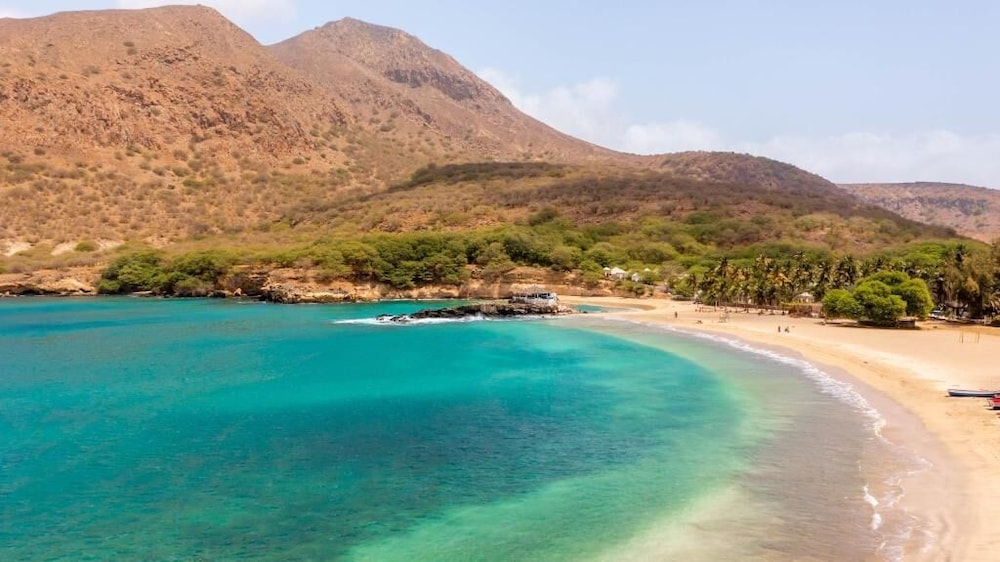 4★
 4★
 4★
 4★
 3★
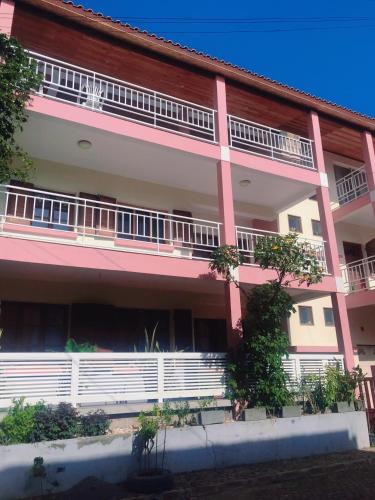
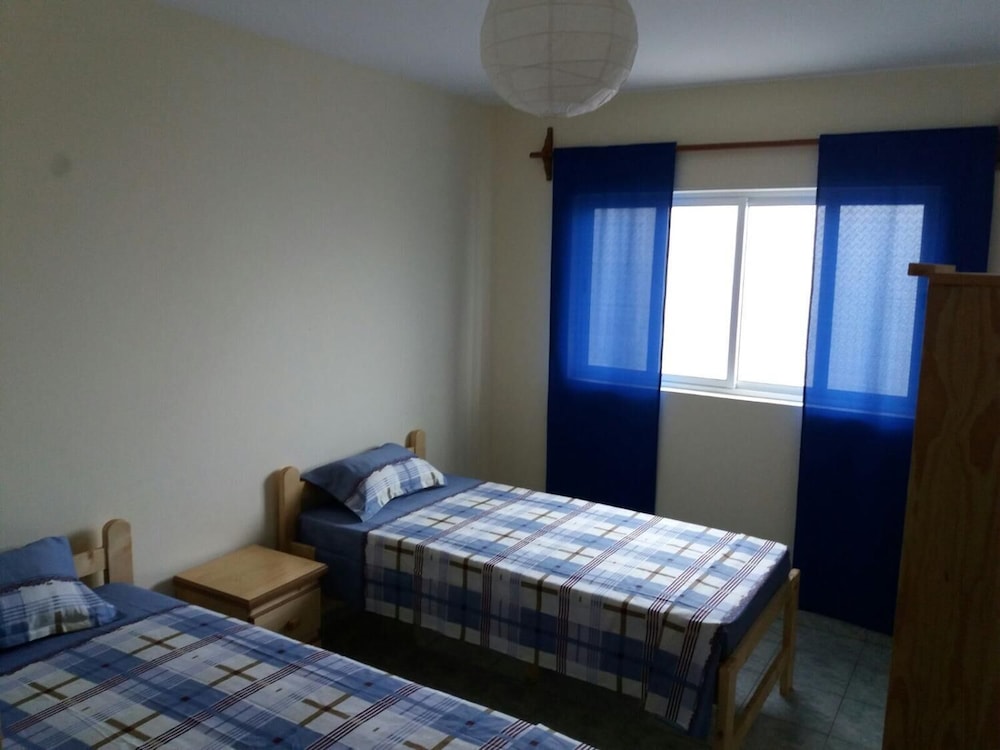
Pensão Da Mex Tarrafal
Tarrafal, Santiago · 3-starGuest score 4.6/5 from the booking supplier · 24 reviewsSee live priceFrequently asked questions
How far is Tarrafal beach from Praia?
Tarrafal beach is about 70 km from Praia, on the north-west tip of Santiago. The drive takes roughly 1 h 15 to 1 h 30, depending on traffic leaving the capital and on stops in the interior. Aluguer minibuses and taxis cover the route, and it works well as a day trip. Check current departure times locally before you go.
Can you swim at Tarrafal beach?
Yes, in normal conditions. The bay is sheltered, so the water close to the shore is usually calm and the entry is mostly sand. Swell and wind still change things from day to day, so look at the sea before going in and stay inside the bay. Children should be watched near the water at all times.
Is Tarrafal beach good for snorkelling?
Snorkelling is best at the rocky edges of the bay, where boulders and weed hold small fish. The sandy middle is less interesting. Visibility varies with swell and with sand in the water, so some days are much clearer than others. Bring your own mask and snorkel and go out with someone else.
Are there palms and shade at Tarrafal beach?
Yes. Palms and low trees run along the back of the beach and give shade through much of the day, though the shadow moves with the sun. Many people bring a mat and settle under the trees. Arrive earlier if you want the pick of the shade on a busy weekend.
What is there to do near Tarrafal beach?
The Museu da Resistência, at the site of the former Tarrafal camp, covers the colonial period and the prisoners held there. The town's seafront is good for watching boats unload. On the road from Praia, Serra Malagueta natural park adds a walk in the high interior. Check museum opening days and park conditions locally.
Is Tarrafal beach worth visiting on a Santiago trip?
Yes, if you want a calm swim and a day out from Praia rather than another city afternoon. The bay is sheltered, the boats are painted and worked daily, and the museum gives the town a history that most beach stops lack. Combine it with Serra Malagueta and the drive becomes part of the day.
When is the best time to visit Tarrafal beach?
The driest months, from November to June, are the safest bet for a beach day and for the drive across the island. Rain is most likely between August and October. The sea is warmest from August to October and coolest from February to March, and winter can bring dust haze from the Sahara.
Do you need a car to reach Tarrafal beach?
No. Aluguer minibuses run between Praia and Tarrafal and leave when full, and taxis can be hired with the fare agreed first. A hire car makes it easier to stop at Serra Malagueta and the museum on the same day. Services change, so confirm the last return before you set out.
Is Tarrafal beach suitable for children?
Usually yes. The bay is sheltered and the entry is sandy, so the water near the shore tends to be calm. Supervision varies, so an adult should stay with children in the water. Shade from the palms helps on hot days, and the town is a short walk away for food and drinks.
Read next
Sources: Turismo de Cabo Verde, Câmara Municipal do Tarrafal, Áreas Protegidas de Cabo Verde. Editorial review: 4 November 2026, IMPT Cape Verde editorial team. Schedules, entry rules and opening times change; check before you go.
Photo credits: Iwoelbern, Public domain, via Wikimedia Commons.