
 5★
In short
Praia de Santa Mónica is a very long, largely empty sandy beach on the south-west coast of Boa Vista. A sandy track links it to Sal Rei and the resort area, and a 4x4 is the safer choice. Waves and currents are strong on many days and there are no lifeguards, so swimming needs care. Bring water and shade.
Island
Boa Vista
Allow
half day
Type
Beaches
Nearest base
Sal Rei
Where is Praia de Santa Mónica?
Praia de Santa Mónica sits on the south-west coast of Boa Vista, in the Barlavento group. It faces the open Atlantic on the dry, sandy side of the island, away from the harbour at Sal Rei. Boa Vista holds about 55 km of beaches, and this is one of the longest stretches among them. The sand runs wide and low, backed by dunes rather than cliffs. There is no town behind it and no promenade along it.
A large resort stands near one end of the beach. Beyond it, the sand continues for kilometres with nothing built on it, and the further you walk the fewer people you meet. The two ends feel different: one is managed and busy at times, the other is bare coast. Walking is the main activity here, along the waterline or on the firmer sand above it. Allow half a day if you want to reach the quiet part and come back.
How do you get to the beach?
Access is by a sandy track from Sal Rei and the resort area. The surface is loose sand in places and ruts form after rain, so a 4x4 is the safer choice. An ordinary hire car can manage in good conditions but risks grounding or bogging down. Local drivers know the line to take. Drive slowly, keep momentum on soft patches and avoid the seaweed line at the top of the beach.
Taxis wait in Sal Rei and can be hired for the run out and back, but agree the fare before setting off and fix a return time, because there is nothing to hail at the beach. Shared aluguers serve the island's main routes rather than this coast, so the practical choice is your own vehicle or a driver who waits. The track is short but slow: allow more time than the map suggests.
What is Praia de Santa Mónica like?
This is open Atlantic coast, not a sheltered bay. The sand is pale and fine, the beach is broad at low water, and the surf is usually running. On calm days the water is clear and shallow for the first few metres; on others the swell arrives in long sets and the shore break is heavy. There are no rocks, no bars and no sunbeds beyond the resort end. Wind is a constant theme: it shapes the dunes and keeps the sand moving.
Shade is scarce. Away from the resort end there is no building, no tree and no natural wall, so the sun is on you all day. The wind that makes the heat bearable also lifts sand, which stings legs and gets into food and cameras. Pick a spot well back from the waterline and settle in for a few hours rather than expecting to move around. A windbreak helps more than an umbrella.
- The sand: Pale, fine and wide at low tide, firm enough to walk on near the waterline.
- The surf: Often heavy shore break; calm mornings are not guaranteed at any time of year.
- The dunes: Low dunes and scrub behind the beach, with no path or boardwalk.
- The quiet: Beyond the resort end, space and silence are the main rewards of the walk.
Is it safe to swim here?
Waves and currents are strong on many days, and there are no lifeguards anywhere along the beach. The shore break can knock an adult off their feet, and rip currents form where water drains back through the sand. Swimming is a judgement call for strong swimmers only, close to the shore, and never alone. Children should stay at the water's edge. If the sea looks confused or brown with sand, stay out.
Conditions change through the day and with the season. A beach that is flat at breakfast can be rough by afternoon as the wind builds. Watch the water for ten minutes before going in, and take advice from people who know the island rather than from other visitors. Help, if needed, is a long way away, and there is no flag system or patrol to watch the water for you.
When is the best time to visit?
Boa Vista is warm all year, with daytime temperatures in the mid-20s °C. The driest months run from November to June, and the short, irregular rains fall mostly between August and October. Trade winds are strongest from about November to May, which cools the air and lifts sand. Dust haze from the Sahara can reach the islands at times in winter, softening the light and the view. Morning is the most comfortable part of any day here.
Sea temperatures peak around August to October, at roughly 25-26 °C, and fall to about 21-22 °C in February and March. For walking the length of the beach, the cooler months are easier. For warm water and long light, late summer suits. Whatever the month, start early, carry water and plan to leave before the afternoon wind gets up. There is no bad season for a beach walk, only different weather.
- November to June: Driest stretch of the year, with the steadiest conditions for long beach walks.
- August to October: Short, irregular rain and the warmest sea of the year, around 25-26 °C.
- Trade winds: Strongest from about November to May, cooling the air and lifting loose sand.
- Dust haze: Saharan harmattan can dull the sky at times in winter, and views stay hazy.
What should you bring with you?
There is nothing to buy at Praia de Santa Mónica beyond the resort end, so everything you need comes with you. Water is the first item: the sun and wind dry you out faster than the heat suggests. Shade is the second, whether that is a beach shelter, a windbreak or a spare sheet. Food, a first aid kit and a fully charged phone complete the basics. A dry bag keeps sand out of everything else.
Footwear matters. The sand gets hot by mid-morning, and the walk back to the track is longer than it looks. Loose clothing and a hat beat anything tight, and a light long-sleeved layer protects shoulders on windy days when you do not notice the burn. Take your rubbish away with you: there are no bins and no collection on this coast. Sunscreen and sunglasses are worth the space in the bag.
- Water: More than you think you need; there is no shop or tap along the beach.
- Shade: A beach shelter or windbreak, since there is no natural shade at all.
- Footwear: Sandals or shoes for hot sand and the rough track back to the road.
- Sun cover: Hat, sunglasses and a long-sleeved layer for windy days.
- Rubbish bag: Everything leaves with you; there are no bins on this stretch.
Can you see turtles at Santa Mónica?
Boa Vista is one of the most important loggerhead turtle nesting areas in the Atlantic, and the island's southern beaches are part of that. Nesting runs roughly from June or July to October, with hatchlings emerging into November. Sightings are never guaranteed and the timing shifts with the season, so ask locally or check with a licensed project before planning an evening on the sand. Boa Vista's turtles are a conservation story as much as a wildlife one.
Rules matter here. Walk only with licensed projects, keep lights off the beach at night, and never touch a turtle or dig into a nest. Vehicle tracks on sand can crush nests and trap hatchlings, which is another reason to keep cars to the established track. If you find a turtle on the beach without a guide, keep well back and let it finish. Humpbacks pass Boa Vista roughly between March and May, best seen from a boat.
What else is nearby?
Sal Rei, the island's main town and port, is the natural base for this coast. The international airport lies about 10 to 15 minutes away by road, and the town has food, fuel and places to stay. Viana Desert, the dune area inland from the north-west coast, is often combined with a beach run in a single day. Praia de Chaves on the west coast is another long sandy beach, backed by resorts and reached by road.
The wreck of the Cabo Santa Maria, which ran aground in 1968, lies on the north coast and is a common stop on an island circuit. Half a day suits Praia de Santa Mónica: a walk, a swim if conditions allow, and the drive back before the afternoon wind. Pair it with turtle watching in season, or with the dunes, rather than trying to see the whole island in one outing.
Hotels in Sal Rei, Boa Vista
For Praia de Santa Mónica, the nearest base is Sal Rei, Boa Vista, with 82 stays in the IMPT hotel database. Listed 5-star first, then 4-star, then by guest score. No prices here: each button opens live availability in the IMPT app.
5★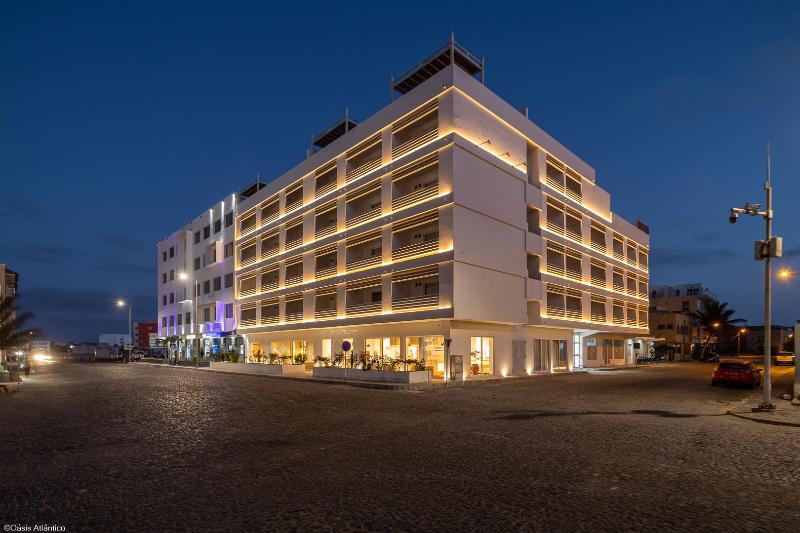 4★
Oasis White Hotel
Sal Rei, Boa Vista · 4-starGuest score 4.3/5 from the booking supplier · 83 reviewsSee live price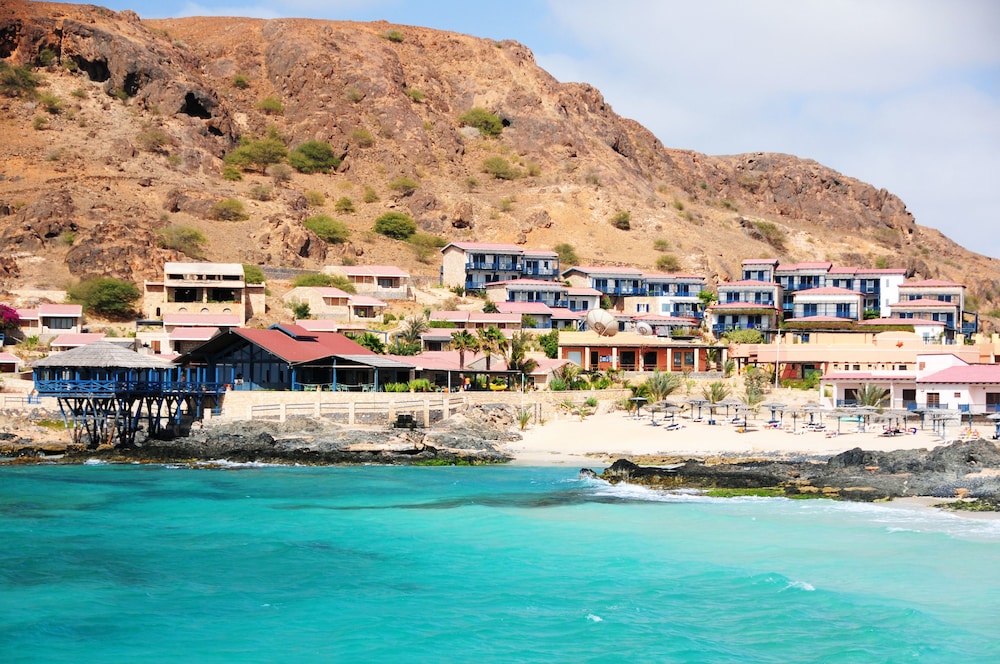 4★
AHG Marine Club Beach Resort
Sal Rei, Boa Vista · 4-starGuest score 3.9/5 from the booking supplier · 431 reviewsSee live price 4★
 4★
 4★
Frequently asked questions
Where exactly is Praia de Santa Mónica?
Praia de Santa Mónica runs along the south-west coast of Boa Vista, in the Barlavento group of Cape Verde. It faces the open Atlantic, well away from the centre of Sal Rei, and it is one of the longest beaches on an island with about 55 km of sand. There is no town behind it.
Do you need a 4x4 for Praia de Santa Mónica?
A 4x4 is the sensible choice for Praia de Santa Mónica. The last stretch is a sandy track where the surface is loose in places and rutted after rain, and an ordinary car can ground or bog down. In good, dry conditions a normal hire car may manage, but drive slowly and keep to the established line.
Is Praia de Santa Mónica safe for swimming?
Only for strong swimmers, and only with care. Praia de Santa Mónica has strong waves and currents on many days, a shore break that can knock adults off their feet, and no lifeguards. Stay close to the shore, never swim alone, keep children at the water's edge, and stay out when the sea looks confused or brown with sand.
Are there lifeguards or facilities at Praia de Santa Mónica?
There are no lifeguards, no flags, no bins and no facilities along Praia de Santa Mónica beyond the resort at one end. That means no shade, no water and no food unless you bring them. Treat it as a wild beach: carry everything in, take everything out, and do not rely on help being close by.
Can you drive onto the sand at Praia de Santa Mónica?
Keep vehicles to the established track. Driving onto the sand at Praia de Santa Mónica risks bogging down in soft patches and, in nesting season, crushing nests and trapping hatchlings. Tracks also scar the dunes for years. Park where others have parked, well back from the waterline, and walk the rest.
When is the best time to visit Praia de Santa Mónica?
The drier months from November to June give the steadiest conditions for walking Praia de Santa Mónica, though the trade winds are also strongest then and lift sand. August to October brings the warmest sea, around 25-26 °C, with a chance of short rain. Mornings are calmer and cooler in every month.
Can you see turtles at Praia de Santa Mónica?
Boa Vista is a major loggerhead nesting area, and the south-west beaches are part of that coast. Nesting runs roughly from June or July to October, with hatchlings into November. Any turtle visit from Praia de Santa Mónica should be with a licensed project, at night, with no lights on the sand and no handling of the animals.
How long do you need at Praia de Santa Mónica?
Half a day is about right. The drive in and out takes longer than the distance suggests, and Praia de Santa Mónica rewards a long walk rather than a quick stop. Take water, shade and food, walk as far as you like along the empty stretch, swim only if conditions allow, and leave before the afternoon wind picks up.
Is Praia de Santa Mónica crowded?
Rarely. Praia de Santa Mónica is kilometres long and only the end near the resort sees much activity; walk for ten minutes and the beach is usually empty. The island's visitor numbers concentrate on the resorts and on Sal Rei, so even in the main season there is space. Weekends and local holidays are busier.
Read next
Sources: Boa Vista municipal council, Cape Verde Ministry of Tourism, Cape Verde Government (gov.cv). Editorial review: 4 November 2026, IMPT Cape Verde editorial team. Schedules, entry rules and opening times change; check before you go.
Photo credits: Adriao, CC BY 3.0, via Wikimedia Commons.